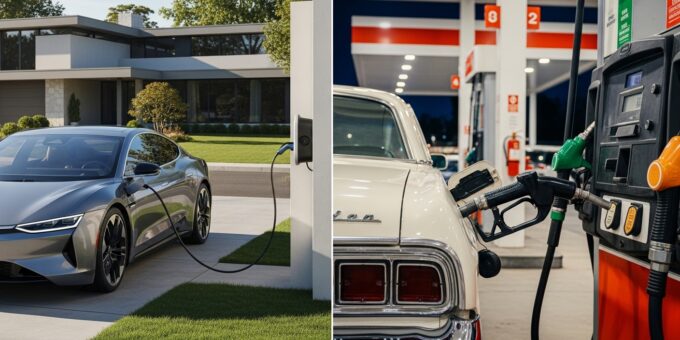
Choosing between an electric vehicle and a gasoline-powered car can feel overwhelming. Prices, fuel savings, maintenance, and long-term value all matter. If you want to make a smart financial decision, you must understand the real differences. This guide explains How to Compare Electric vs Gas Cars and Pick the Best Option for Your Budget using clear, practical steps.
Whether you are buying your first vehicle or upgrading, the goal is simple. Spend less money over time while getting reliable performance. Let’s explore how to do that.
Understanding the Core Difference Between Electric and Gas Cars
Electric cars run on batteries and motors. Gas cars rely on internal combustion engines and fuel. This single difference affects cost, maintenance, efficiency, and environmental impact.
For example, the Tesla Model 3 is powered entirely by electricity. In contrast, the Toyota Corolla uses gasoline. Each option fits different budgets and driving needs.
To choose wisely, compare total ownership cost rather than just the purchase price.
Upfront Purchase Price Comparison
Electric Vehicles
Electric cars usually cost more at the dealership. Battery technology is expensive, which increases the sticker price. However, government incentives and tax credits can reduce the real cost.
Gasoline Cars
Gas vehicles typically have lower upfront prices. This makes them attractive for buyers with limited savings or financing challenges.
If your priority is the lowest immediate payment, gas cars often win. But long-term costs tell a different story.
Fuel and Energy Costs Over Time
Fuel is one of the biggest lifetime expenses. Comparing electricity and gasoline prices helps determine real affordability.
Electric Charging Costs
Charging at home is usually cheaper than buying gasoline. Many drivers save hundreds or even thousands of dollars each year. Public fast charging costs more, but still often beats fuel prices.
Gasoline Expenses
Gas prices fluctuate. Over several years, fuel spending can exceed the initial price difference between electric and gas vehicles.
This is why long-term planners carefully evaluate energy cost trends before deciding.
Maintenance and Repair Savings
Maintenance is another major financial factor.
Electric Car Maintenance
Electric vehicles have fewer moving parts. There are no oil changes, spark plugs, or exhaust systems. This reduces routine service costs and unexpected repairs.
Gas Car Maintenance
Gas engines require regular servicing. Oil changes, transmission repairs, and engine wear increase total expenses over time.
For drivers focused on predictable spending, electric vehicles often provide better long-term value.
Insurance and Depreciation Considerations
Insurance premiums vary by model, location, and driver history. Electric cars sometimes cost more to insure because of higher repair costs and advanced technology.
Depreciation also matters. Some electric vehicles retain value well due to demand and software updates. Others drop quickly if battery technology improves.
Gas cars follow more predictable depreciation patterns. This stability can help budget-focused buyers estimate resale value.
Driving Range and Daily Convenience
Electric Range Limits
Most modern electric cars travel 250–400 miles per charge. This is enough for daily commuting and errands. However, long road trips require charging stops and planning.
Gasoline Flexibility
Gas cars refuel in minutes and have extensive station networks. For frequent long-distance drivers, this convenience can outweigh fuel savings.
Your lifestyle should guide this decision more than technology trends.
Environmental Impact and Long-Term Regulations
Electric vehicles produce zero tailpipe emissions. This reduces air pollution and supports climate goals. Many cities are encouraging EV adoption through incentives and future restrictions on gas engines.
Gas cars still dominate global roads, but regulations are tightening. Choosing an electric vehicle today may protect long-term resale value and compliance.
Hidden Financial Benefits Most Buyers Miss
Smart budgeting goes beyond fuel and maintenance. Consider these overlooked savings:
- Tax credits and rebates for electric vehicles
- Lower registration or toll fees in some regions
- Home solar charging possibilities
- Reduced time spent at service centers
These advantages quietly improve total ownership cost.
Budget Planning Strategy Before You Buy
Before choosing, calculate a five-year ownership estimate. Include:
- Purchase price after incentives
- Fuel or electricity costs
- Maintenance and repairs
- Insurance premiums
- Expected resale value
This simple analysis reveals the true winner for your finances.
Common Mistakes When Comparing Electric vs Gas Cars
Many buyers focus only on sticker price. Others ignore charging access or driving habits. Avoid these errors:
- Ignoring long-term fuel savings
- Overlooking insurance differences
- Not checking local charging infrastructure
- Skipping resale value research
Careful comparison prevents expensive regrets.
How This Decision Connects to Broader Financial Goals
Vehicle spending affects your ability to build wealth. Saving on transportation frees money for investing or building an online business.
Some people redirect fuel savings into affiliate marketing or a dropshipping business. Others focus on long-term passive income strategies.
Even topics like affiliate vs dropshipping become relevant when transportation savings increase available capital.
In short, choosing the right car can support bigger financial success.
Final Verdict: Which Option Is Best for Your Budget?
The best choice depends on your priorities.
- Choose electric if you want lower long-term costs, minimal maintenance, and environmental benefits.
- Choose gas if you need the lowest upfront price, easy refueling, and predictable depreciation.
By carefully evaluating total ownership cost, you can confidently apply the strategy behind How to Compare Electric vs Gas Cars and Pick the Best Option for Your Budget.
Smart comparison leads to smarter spending. And smarter spending creates financial freedom over time.
