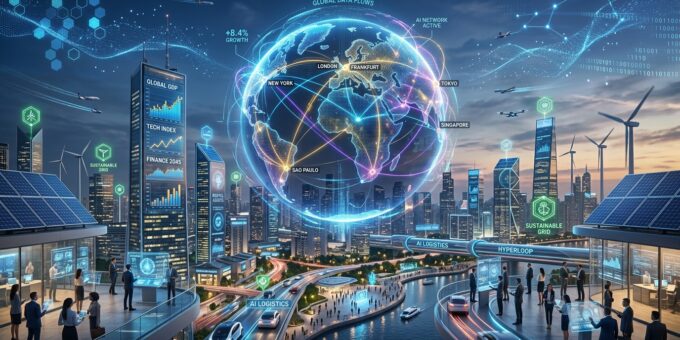
The future of economics is evolving faster than ever before. Driven by rapid technological advancements, shifting global trade dynamics, and changing consumer behavior, modern economies are entering a phase of transformation that will redefine how wealth is created and distributed. Understanding these shifts is essential for policymakers, investors, and businesses that want to stay competitive in a highly uncertain global landscape.
In this article, we explore the most important emerging trends shaping the future of economics, along with practical market predictions that can help you prepare for what lies ahead. From artificial intelligence to global inflation cycles and the rise of digital entrepreneurship, each factor plays a critical role in shaping tomorrow’s financial systems.
Digital Transformation and the Future of Economics
One of the most powerful forces shaping the future of economics is digital transformation. Technology is no longer just a supporting tool; it has become the foundation of modern economic systems. Cloud computing, artificial intelligence, blockchain, and big data are redefining productivity and efficiency across industries.
Businesses that once relied on traditional operations are now shifting toward digital-first strategies. Governments are also digitizing public services, making economic systems more transparent and accessible. This shift improves data-driven decision-making and reduces operational inefficiencies across sectors.
For further insights into digital transformation trends, visit World Bank Economic Reports and IMF Global Outlook.
Globalization Shifts and Supply Chain Resilience
Globalization remains a key driver of the future of economics, but it is undergoing major restructuring. The COVID-19 pandemic exposed vulnerabilities in global supply chains, forcing companies to rethink outsourcing and production strategies.
Regionalization of Trade
Instead of relying solely on global supply chains, many countries are now adopting regional trade networks. This approach reduces dependency risks and increases economic resilience during global disruptions.
Supply Chain Innovation
Technologies such as blockchain tracking, predictive logistics, and AI-driven inventory systems are improving supply chain efficiency. These innovations help reduce delays and improve transparency in global trade systems.
Inflation, Monetary Policy, and Central Bank Strategies
Inflation remains a central concern in the future of economics. Central banks around the world are continuously adjusting interest rates and monetary policies to stabilize prices and maintain economic growth.
In the coming years, we can expect more dynamic monetary frameworks that respond faster to economic shocks. Digital currencies issued by central banks (CBDCs) may also play a major role in improving monetary control and reducing transaction costs.
For deeper financial analysis, explore Federal Reserve Economic Data.
Artificial Intelligence and the Automation Economy
Artificial intelligence is transforming labor markets and redefining productivity. As automation becomes more advanced, it will significantly influence the future of economics by replacing repetitive tasks and creating new job categories.
While some traditional jobs may decline, new roles in AI development, data science, and machine learning are emerging rapidly. This transition highlights the importance of continuous learning and skill adaptation in modern economies.
Automation also increases efficiency in manufacturing, healthcare, and financial services, leading to lower costs and higher output across industries.
Digital Entrepreneurship and Online Business Growth
The rise of digital platforms has created new opportunities for global entrepreneurship. Today, anyone with an internet connection can build a scalable business, making digital entrepreneurship a major part of the future of economics.
One growing area is the comparison of affiliate vs dropshipping models. Both offer entry-level opportunities for entrepreneurs with low startup costs, but they operate differently in terms of logistics and revenue generation.
Affiliate marketing allows individuals to earn commissions by promoting products, while a dropshipping business enables sellers to operate without holding inventory. Both models contribute significantly to the modern digital economy.
Another important concept is passive income, which is becoming a major financial goal for digital entrepreneurs. Many individuals are now building streams of income through affiliate marketing, content creation, and automated sales funnels.
As the digital economy expands, the definition of an online business continues to evolve. It is no longer limited to e-commerce stores but now includes content platforms, SaaS products, and creator-driven ecosystems.
For beginners exploring this space, understanding the fundamentals of affiliate marketing and dropshipping business models is essential for long-term success.
Sustainability and Green Economics
Sustainability is becoming a defining pillar of the future of economics. Governments and corporations are increasingly prioritizing environmental responsibility as climate change concerns grow.
Green economics focuses on reducing carbon emissions, promoting renewable energy, and encouraging sustainable production practices. This shift is also driving investment in clean technologies such as solar energy, electric vehicles, and carbon capture systems.
Businesses that adopt sustainable practices are likely to gain competitive advantages in the global market, as consumers become more environmentally conscious.
Learn more about sustainability policies at United Nations Climate Action.
Market Predictions for 2030 and Beyond
The future of economics will be defined by several long-term trends that are expected to reshape global markets by 2030 and beyond.
1. Digital Currency Adoption
Cryptocurrencies and central bank digital currencies will become more integrated into mainstream financial systems, improving transaction speed and reducing costs.
2. AI-Driven Economic Planning
Governments will increasingly use AI models to predict economic outcomes and design more effective fiscal policies.
3. Decentralized Finance Growth
Decentralized finance (DeFi) will continue to expand, offering alternatives to traditional banking systems.
4. Global Labor Market Shifts
Remote work and gig economy platforms will reshape employment structures, increasing flexibility but also competition.
5. Rise of Creator Economies
Independent creators will play a major role in shaping digital markets, supported by platforms that enable monetization of content and services.
Conclusion
The future of economics is complex, interconnected, and rapidly evolving. From digital transformation and AI to sustainability and global trade restructuring, each factor contributes to a new economic paradigm.
Individuals and businesses that adapt early to these changes will have a significant advantage. Whether you are exploring affiliate marketing, building a dropshipping business, or developing a scalable online business, understanding these macroeconomic trends is essential.
As the world moves toward a more digital, automated, and sustainable economy, opportunities for passive income and innovation will continue to grow. The key is to stay informed, adaptable, and forward-thinking in this evolving landscape.
