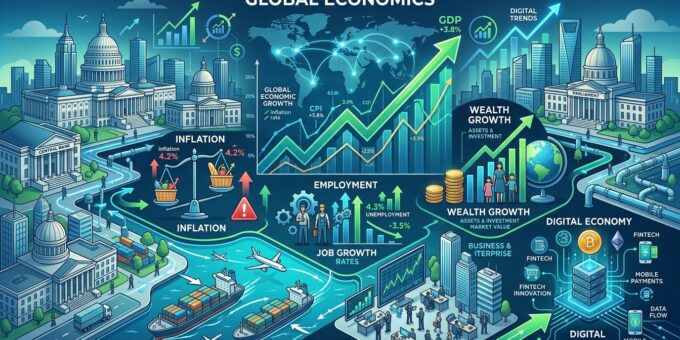
Understanding how economic policies influence jobs, inflation, and wealth creation is essential in today’s fast-changing global economy. Governments and central banks continuously adjust policies to stabilize growth, control prices, and improve living standards. These decisions affect everything from employment opportunities to business expansion and personal financial security. Whether you are a student, investor, or entrepreneur running an online business, economic policies shape your financial environment in powerful ways.
In this article, we will explore how major policy tools such as taxation, government spending, and interest rate adjustments influence employment levels, price stability, and wealth generation. We will also connect these macroeconomic forces with modern income opportunities such as affiliate marketing, dropshipping business, and passive income models.
What Are Economic Policies?
Economic policies are strategies used by governments and institutions to regulate economic activity. The two most important types are fiscal policy and monetary policy.
:contentReference[oaicite:0]{index=0} refers to government decisions on taxation and public spending. When governments increase spending on infrastructure, healthcare, or education, they stimulate job creation and economic growth. On the other hand, higher taxes can slow down consumption and business expansion.
:contentReference[oaicite:1]{index=1} is managed by central banks. It influences interest rates, money supply, and inflation control. Lower interest rates make borrowing cheaper, encouraging businesses to invest and hire more workers. Higher rates can slow down spending to control inflation.
These policies directly influence economic stability, affecting individuals, businesses, and global markets. For example, during inflationary periods, central banks may tighten monetary policy to stabilize prices.
How Economic Policies Influence Jobs
Employment is one of the most visible outcomes of economic policy decisions. When governments implement expansionary fiscal policies, such as increasing public projects or reducing taxes, businesses often expand their operations. This leads to higher demand for labor and increased hiring.
In contrast, contractionary policies may slow down hiring. For example, raising interest rates increases borrowing costs, making companies more cautious about expansion. As a result, job creation may decline temporarily.
:contentReference[oaicite:2]{index=2} is closely tied to these policy shifts. Lower unemployment usually occurs during economic expansion, while higher unemployment can appear during economic slowdowns.
In today’s digital economy, job creation is not limited to traditional employment. Economic policies that support digital infrastructure and innovation also encourage growth in the online business sector. Many individuals now build income streams through affiliate marketing and e-commerce platforms, reducing reliance on traditional job markets.
Economic Policies and Inflation Control
Inflation plays a critical role in determining the cost of living and purchasing power. It is defined as a sustained increase in the general price level of goods and services over time. Moderate inflation is normal in a growing economy, but high inflation can reduce savings value and harm consumers.
:contentReference[oaicite:3]{index=3} is heavily influenced by monetary and fiscal decisions. For instance, when governments print more money or keep interest rates too low for too long, inflation may rise rapidly.
Central banks often respond by increasing interest rates to reduce spending and stabilize prices. This approach helps control inflation but may also slow down economic growth temporarily.
For consumers and businesses, inflation affects everything from wages to investment returns. Entrepreneurs running a dropshipping business or other online ventures must carefully monitor inflation trends because rising costs can impact profit margins and consumer demand.
A stable inflation environment encourages long-term planning, investment, and wealth accumulation. Without stability, uncertainty discourages both business expansion and consumer spending.
Wealth Creation Through Economic Policies
Wealth creation is one of the most important long-term effects of economic policy. When governments create stable financial environments, individuals and businesses gain confidence to invest and grow assets.
Lower taxes and supportive regulations often encourage entrepreneurship and investment. This leads to innovation, job creation, and higher income levels across society. In contrast, unstable policies can discourage investment and slow down wealth accumulation.
In modern economies, wealth creation is no longer limited to traditional industries. Digital transformation has opened new opportunities such as affiliate vs dropshipping business models, content creation, and digital marketing. These methods allow individuals to build scalable income streams with relatively low startup costs.
For example, affiliate marketing allows individuals to earn commissions by promoting products online, while a dropshipping business enables entrepreneurs to sell products without holding inventory. These models thrive in stable economic environments where digital infrastructure and consumer spending remain strong.
Additionally, passive income strategies such as investing in stocks, real estate, and digital assets are heavily influenced by interest rates and inflation trends. Lower interest rates often push investors toward higher-return assets, increasing wealth-building opportunities.
Governments that support innovation, reduce barriers to business formation, and maintain stable financial systems create the best conditions for long-term wealth creation.
Global Trade, Investment, and Economic Growth
Economic policies also influence global trade and investment flows. Trade agreements, tariffs, and foreign investment rules determine how easily goods and capital move across borders.
Open trade policies often lead to increased competition, innovation, and lower prices for consumers. However, protectionist policies may temporarily support domestic industries but can also raise costs for consumers.
Investment flows are highly sensitive to policy changes. Investors prefer stable environments with predictable regulations and strong legal systems. When confidence is high, foreign direct investment increases, boosting job creation and infrastructure development.
These global interactions further strengthen wealth creation by connecting markets and expanding business opportunities worldwide.
The Balance Between Growth, Jobs, and Inflation
One of the biggest challenges for policymakers is balancing economic growth, job creation, and inflation control. Stimulating growth too aggressively may lead to inflation, while tightening policies too much can increase unemployment.
This balance requires careful adjustments of both fiscal and monetary tools. Governments must respond to economic data and global conditions to maintain stability.
For individuals and businesses, understanding this balance helps in making better financial decisions. Whether you are investing, starting a business, or exploring digital income streams like online business models, awareness of economic policy trends can provide a strategic advantage.
Conclusion
In conclusion, how economic policies influence jobs, inflation, and wealth creation is a complex but essential topic for understanding modern economies. Fiscal and monetary decisions shape employment levels, control inflation, and determine long-term wealth opportunities.
From traditional industries to digital ecosystems like affiliate marketing and dropshipping business, economic policies impact every layer of income generation. By understanding these forces, individuals can better navigate financial decisions and take advantage of emerging opportunities.
As economies continue to evolve, those who understand policy-driven changes will be better positioned to build stable careers, successful businesses, and sustainable wealth.
