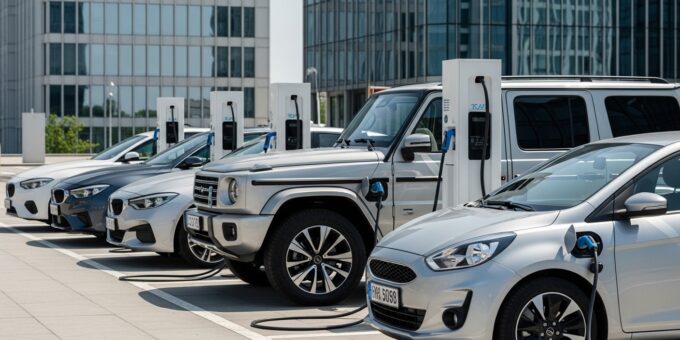
How to Compare Electric Vehicles and Find the Best EV for Your Budget is one of the most searched topics among modern car buyers. With fuel prices rising and governments pushing clean energy, electric vehicles (EVs) are no longer a luxury — they are a smart financial decision.
But choosing the right EV is not simple. There are differences in battery range, charging speed, incentives, maintenance costs, and resale value. In this guide, you will learn exactly how to compare electric vehicles and find the best EV for your budget without overspending.
Why Comparing Electric Vehicles Matters
Electric vehicles can save thousands of dollars over time. However, the upfront price can vary widely. Some models qualify for tax credits and incentives, while others do not. Comparing EVs properly helps you:
- Lower long-term ownership costs
- Maximize government incentives
- Reduce charging expenses
- Choose the right battery range
- Improve resale value
According to the U.S. Department of Energy, federal tax credits can significantly reduce EV purchase costs. Missing these incentives could mean losing thousands.
Step 1: Determine Your Budget Clearly
The first step in how to compare electric vehicles and find the best EV for your budget is defining what “budget” truly means.
Upfront Purchase Cost
Electric vehicles range from affordable compact models to premium luxury cars. Entry-level EVs often start around $25,000–$35,000. Luxury models can exceed $70,000.
Total Cost of Ownership (TCO)
Do not focus only on the sticker price. Consider:
- Electricity costs
- Insurance premiums
- Maintenance savings
- Battery warranty
- Resale value
EVs typically require less maintenance because they have fewer moving parts. There is no oil change, fewer brake replacements, and no transmission repairs.
Step 2: Compare Battery Range
Battery range is one of the most important factors when comparing electric vehicles.
Most modern EVs offer 200 to 350 miles per charge. Ask yourself:
- How far do you drive daily?
- Do you take long road trips?
- Is charging infrastructure available in your area?
You can check charging station maps at PlugShare to evaluate local charging availability.
If you commute 30 miles per day, a 220-mile range is more than enough. Paying extra for 350 miles might not be necessary.
Step 3: Evaluate Charging Speed and Options
Not all EVs charge at the same speed. Charging options include:
Level 1 Charging
Uses a standard home outlet. Slow but convenient.
Level 2 Charging
Requires home charger installation. Charges in 4–8 hours.
DC Fast Charging
Charges up to 80% in 20–40 minutes depending on the model.
For example, the Tesla Model 3 offers fast Supercharger access, making long-distance travel easier. Meanwhile, the Chevrolet Bolt EUV provides affordable commuting but slower fast-charging speeds.
Always compare charging network compatibility before buying.
Step 4: Compare Popular EV Models
When learning how to compare electric vehicles and find the best EV for your budget, reviewing top models helps clarify value.
Tesla Model 3
- Strong range options
- Access to Supercharger network
- Higher resale value
- Premium price point
Chevrolet Bolt EUV
- Affordable pricing
- Solid range for city driving
- Lower upfront cost
Hyundai Kona Electric
- Excellent efficiency
- Competitive warranty
- Practical SUV design
Ford Mustang Mach-E
- Sporty performance
- Multiple trim options
- Strong brand reputation
Each EV serves different needs. Budget buyers may prioritize affordability, while commuters may focus on range efficiency.
Step 5: Check Government Incentives and Rebates
Government incentives dramatically impact pricing. Federal tax credits can reach up to $7,500 in some regions. Many states offer additional rebates.
Visit FuelEconomy.gov to check current EV incentives in your state.
These incentives can make a mid-range EV cheaper than a gasoline car over five years.
Step 6: Compare Maintenance and Reliability
Electric vehicles have fewer components than gasoline cars. That means fewer mechanical failures.
Battery warranties often last 8 years or 100,000 miles. Some brands offer even longer coverage.
Before purchasing, research:
- Battery degradation reports
- Warranty coverage details
- Service center availability
Step 7: Consider Insurance Costs
Insurance premiums for EVs can sometimes be higher. This is due to battery replacement costs and specialized repairs.
Get insurance quotes before finalizing your purchase. Comparing insurance can save hundreds per year.
Step 8: Think About Resale Value
Resale value protects your investment. Some EV brands hold value better due to brand demand and battery reputation.
Vehicles with strong software updates and over-the-air improvements tend to maintain resale strength.
EV Ownership as a Financial Strategy
Buying an EV is not just an environmental choice. It can be part of a broader financial strategy.
Many individuals who build passive income streams through affiliate marketing or a dropshipping business prefer EVs because of lower fuel and maintenance costs. When running an online business, cutting recurring expenses increases profitability.
In fact, the debate between affiliate vs dropshipping often centers on cost control and scalability. The same principle applies to EV ownership. Lower operating costs mean more capital for investment.
If you earn from an online business, allocating savings from reduced fuel expenses into investments or expanding your affiliate marketing campaigns can compound long-term wealth.
Gasoline vs Electric: Long-Term Savings Comparison
Let’s compare a traditional gasoline vehicle with an EV over five years:
- Fuel savings: $4,000–$7,000
- Maintenance savings: $2,000–$4,000
- Tax incentives: Up to $7,500
These savings can rival returns from a small dropshipping business or beginner-level affiliate marketing strategy.
That is why understanding how to compare electric vehicles and find the best EV for your budget is not just about cars. It is about financial optimization.
Final Checklist Before Buying an EV
Before making your final decision, confirm:
- Does the range meet your daily needs?
- Do you qualify for incentives?
- Is home charging feasible?
- Are maintenance and insurance affordable?
- Does the resale value justify the price?
Test drive at least two different models. Compare comfort, software interface, and driving feel.
Conclusion
Understanding How to Compare Electric Vehicles and Find the Best EV for Your Budget empowers you to make a smart, data-driven decision.
Focus on total cost of ownership, not just the purchase price. Compare range, charging speed, incentives, maintenance, and resale value. Align your choice with your lifestyle and financial goals.
Electric vehicles are no longer the future. They are the present. With the right comparison strategy, you can secure both environmental benefits and long-term savings.
