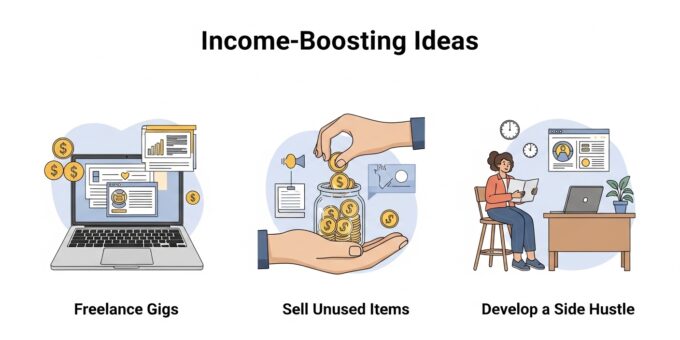
Creating a smart budget is one of the most powerful steps you can take toward financial freedom. Whether your goal is to grow your savings, eliminate debt, or build long-term wealth, the right budgeting strategy can transform your finances quickly.
In this guide, you’ll learn how to create a smart budget that maximizes savings and eliminates debt fast using simple, proven techniques. These methods are beginner-friendly and designed for real-life situations.
Why a Smart Budget Matters More Than Ever
A traditional budget tracks income and expenses. A smart budget goes further. It prioritizes your financial goals and ensures every dollar works for you.
With rising living costs, having a clear plan is essential. A smart budget helps you:
- Increase savings consistently
- Pay off debt faster
- Avoid unnecessary spending
- Build long-term passive income streams
Step 1: Calculate Your True Monthly Income
Start by identifying how much money you actually bring in each month. Include:
- Salary (after tax)
- Side hustles
- Freelance income
- Online business earnings
If you run a dropshipping business or earn from affiliate marketing, use your average monthly income to stay realistic.
Step 2: Track Every Expense
You can’t improve what you don’t measure. Track your spending for at least 30 days.
Divide expenses into:
- Fixed (rent, utilities, insurance)
- Variable (food, entertainment)
- Debt payments
Use tools like Mint or YNAB to automate tracking.
Step 3: Use the 50/30/20 Rule (Smart Version)
The classic 50/30/20 rule is a great starting point, but a smart budget adjusts it for faster results.
Recommended Breakdown
- 50% Needs
- 20% Wants
- 30% Savings & Debt Repayment
If you want to eliminate debt fast, increase the 30% portion as much as possible.
Step 4: Prioritize High-Interest Debt
Not all debt is equal. Focus on paying off high-interest debt first.
This includes:
- Credit cards
- Personal loans
Use the avalanche method to minimize interest costs. Learn more from Investopedia.
Step 5: Automate Your Savings
Automation removes temptation. Set up automatic transfers to your savings account.
Start with:
- Emergency fund (3–6 months of expenses)
- Investment accounts
This habit builds consistent passive income opportunities over time.
Step 6: Cut Unnecessary Expenses
Review your spending and eliminate what doesn’t add value.
Common areas to reduce:
- Unused subscriptions
- Dining out frequently
- Impulse purchases
Even small cuts can significantly boost savings over time.
Step 7: Increase Your Income Streams
A smart budget is not only about saving. It’s also about earning more.
Consider:
- Starting an online business
- Exploring affiliate marketing
- Launching a dropshipping business
Many people debate affiliate vs dropshipping. Both can generate income, but affiliate marketing requires less upfront cost.
Learn more about building income streams at Shopify Blog.
Step 8: Set Clear Financial Goals
Your budget needs direction. Set short-term and long-term goals.
Examples
- Pay off $5,000 debt in 6 months
- Save $10,000 in a year
- Build a passive income stream
Clear goals keep you motivated and focused.
Step 9: Use the Zero-Based Budgeting Method
This method assigns every dollar a purpose.
Income – Expenses = 0
That doesn’t mean spending everything. It means allocating every dollar intentionally.
This approach ensures maximum efficiency and faster financial progress.
Step 10: Review and Adjust Monthly
Your budget is not static. Review it monthly and adjust based on:
- Income changes
- Unexpected expenses
- Financial goals
Consistency is the key to long-term success.
Common Budgeting Mistakes to Avoid
1. Being Too Restrictive
A strict budget can lead to burnout. Allow some flexibility.
2. Ignoring Small Expenses
Small purchases add up quickly. Track everything.
3. Not Planning for Emergencies
An emergency fund is essential to avoid new debt.
How a Smart Budget Builds Long-Term Wealth
When you follow a smart budget, you create a system that:
- Reduces financial stress
- Increases savings rate
- Supports investment growth
Over time, you can reinvest savings into opportunities that generate passive income.
Final Thoughts
Learning how to create a smart budget that maximizes savings and eliminates debt fast is a life-changing skill. It doesn’t require complex tools or financial expertise. It requires consistency, discipline, and clear goals.
Start today. Track your expenses, prioritize your goals, and build a system that works for you. The sooner you begin, the faster you’ll see results.
